muzzle
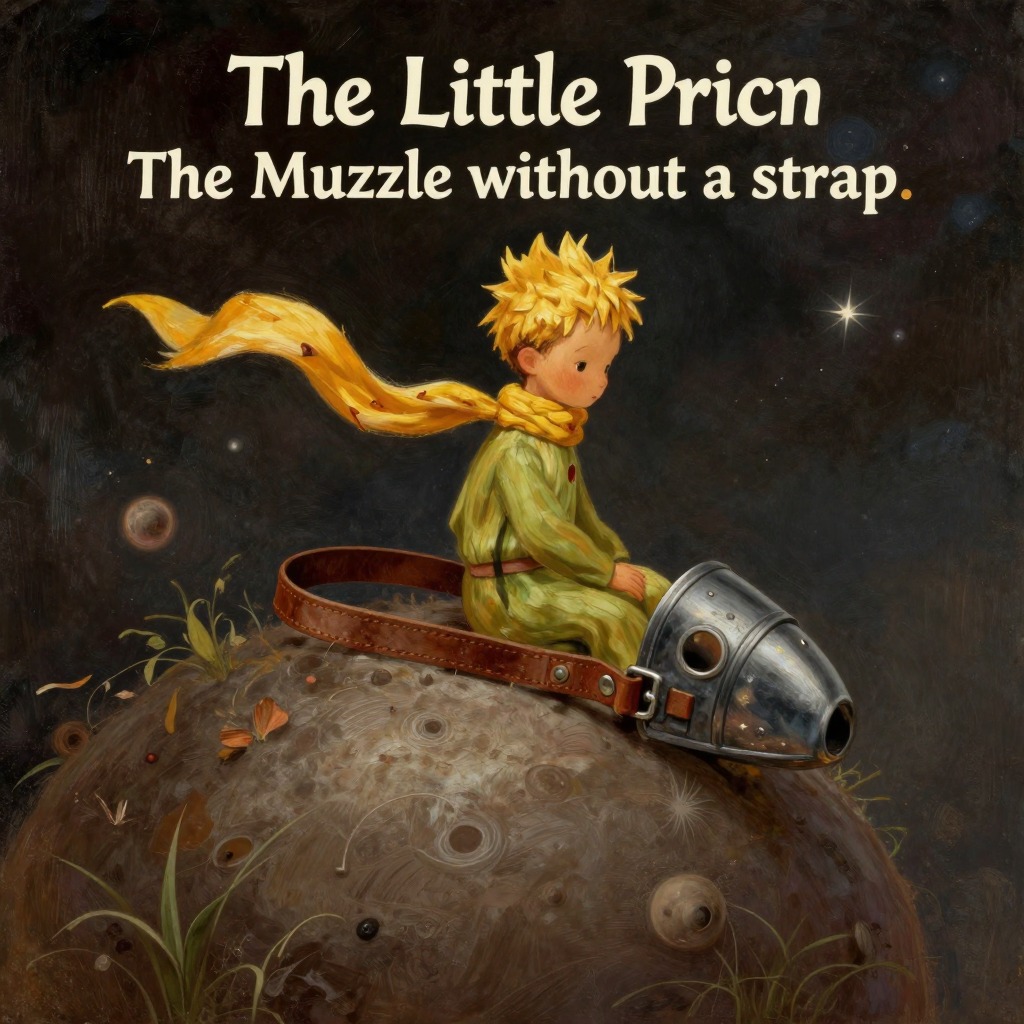
The muzzle is a small, hand-drawn object that carries an outsized weight of consequence in the story's final pages. The Narrator, during the Little Prince's last night on Earth, draws a muzzle for the sheep the Little Prince had asked for. But in a moment of distraction, he forgets to add the leather strap that would allow the muzzle to be fastened. This single omission transforms the muzzle from a simple tool of protection into a symbol of unresolved uncertainty, one that haunts the Narrator's thoughts long after the Little Prince has disappeared.
The Missing Strap and Its Consequences
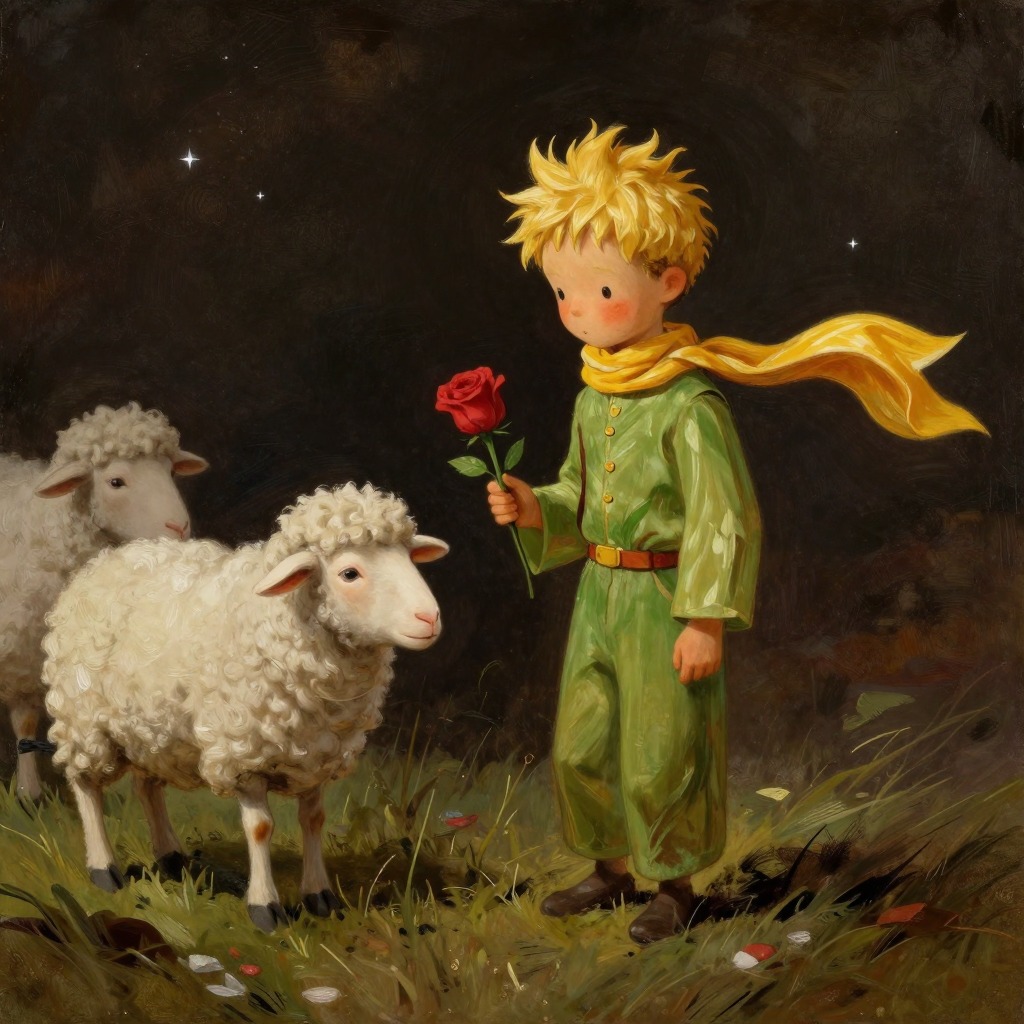
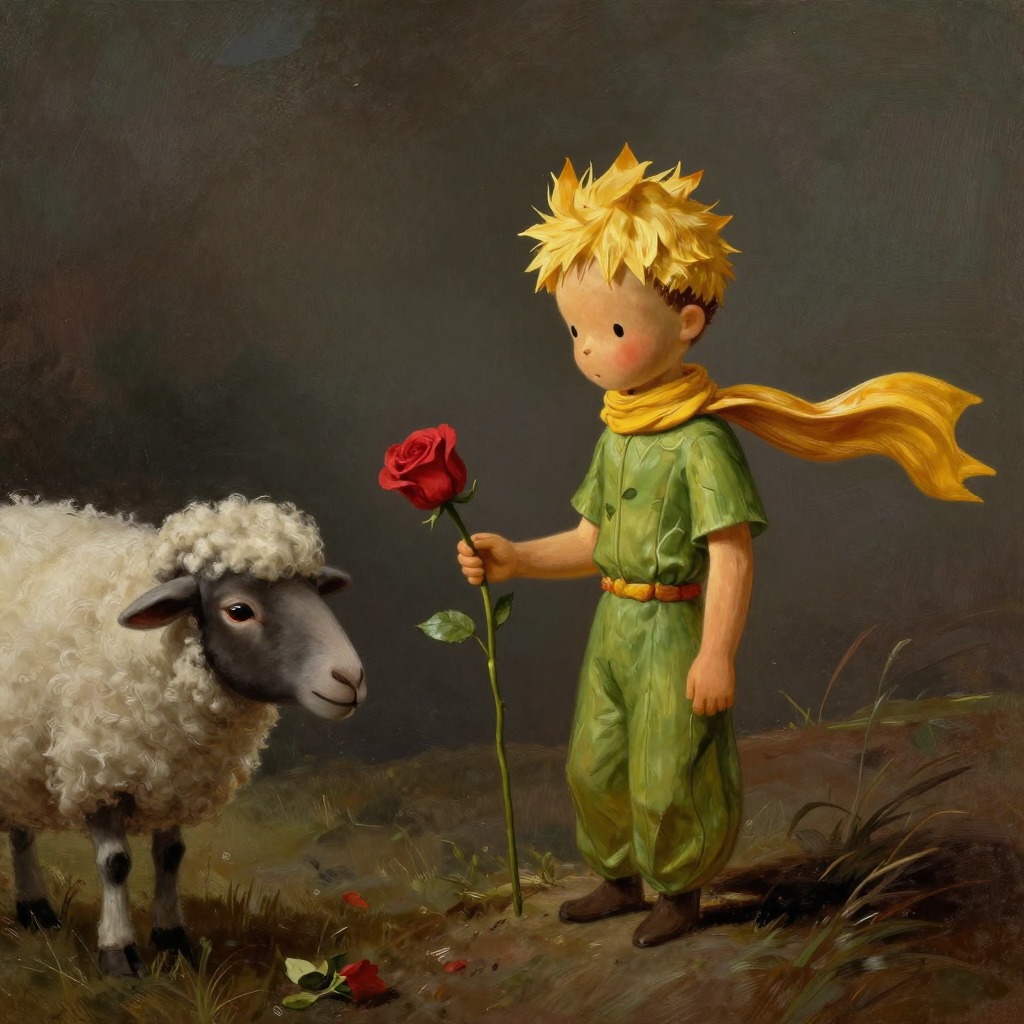
The forgotten strap is not a minor oversight; it becomes the hinge on which the story's deepest anxieties turn. The Narrator explicitly states that because the strap was never drawn, the Little Prince will never have been able to fasten the muzzle on his sheep. This means the sheep, left unmuzzled, could at any moment eat the flower—the Little Prince's beloved rose, left behind on his planet. The Narrator's mind oscillates between two possibilities. At one moment he reassures himself: the Little Prince shuts his flower under its glass globe every night and watches over his sheep very carefully. In that hopeful version, the stars laugh with sweetness. But at another moment he imagines the opposite: on some evening the Little Prince forgot the glass globe, or the sheep got out without making any noise in the night. Then the little bells of the stars are changed to tears.
The Muzzle as a Source of Narrative Tension
This uncertainty is not merely a private worry; the Narrator elevates it into a great mystery that implicates the reader. He declares that for those who love the Little Prince, nothing in the universe can be the same if somewhere, unknown, a sheep that was never seen has—yes or no?—eaten a rose. The muzzle, by its incompleteness, becomes the object that makes this question possible. It is the concrete, material trace of a human failure—absent-mindedness—that opens a chasm of unknowable consequence. The Narrator insists that no grown-up will ever understand that this is a matter of so much importance, marking the muzzle's missing strap as a detail that only those who have learned to see with a child's heart can truly grasp.
The Muzzle and the Landscape of Loss
The muzzle is also tied to the story's most iconic image: the loveliest and saddest landscape in the world, the spot in the African desert where the Little Prince appeared on Earth and disappeared. The Narrator draws this landscape again to impress it on memory, and he asks the reader to look at it carefully, to wait under the star, and to recognize the Little Prince if he returns—a little man who laughs, has golden hair, and refuses to answer questions. The muzzle, though never mentioned in that final scene, is the object that connects the landscape of departure to the ongoing, unresolved story of what happens after. It is the reason the Narrator's sorrow, though comforted a little, is not entirely soothed. The muzzle's missing strap ensures that the story never truly ends; it remains suspended in the question of whether the sheep has eaten the flower, a question that changes everything.
Thematic Significance: Care, Absent-Mindedness, and the Unknowable
The muzzle, in its incompleteness, embodies the story's central meditation on the fragility of care. The Narrator's act of drawing the muzzle was an act of love—a practical provision for the Little Prince's journey. But the forgotten strap reveals that even the most devoted care can be undone by a single moment of distraction. The muzzle thus becomes a thing that, in its broken or incomplete state, forces its materiality into visibility. It is no longer a transparent tool but a conspicuous reminder of human fallibility. The Narrator's alternating thoughts—hope and despair, reassurance and dread—are not resolved. The muzzle remains, in the reader's mind, the object that keeps the story's central question alive: in a universe where a sheep may or may not have eaten a rose, everything changes, and no grown-up will ever understand why this matters so much.